
What if Jesus prayed for unity because He believed it was actually possible?
We have returned to Jesus’ prayer in John 17 many times, often acknowledging just how difficult unity can be. But in a recent conversation, a friend asked a question that stopped me:
“Why would He pray for something that wasn’t achievable?”
What if we have spent so much time talking about how difficult unity is that we have missed the hope within Jesus’ prayer?
He prayed that we would be one.
Not as an ideal we admire from a distance, but as something His Church could actually embody.
In our latest Collected conversation, Tracy Barrell invites us to broaden our view of the biblical story. To see unity and belonging not as an addition to the gospel, but as part of the fullness of God’s redemptive work.
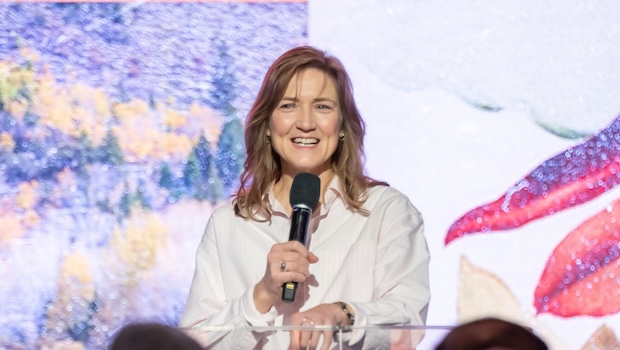
Tracy has spent two decades on staff with Hillsong College and now is a Teaching Pastor based in Australia.
Unity and belonging are not a project.
Tracy quickly highlighted that unity and belonging are not one person’s role, a passing cultural conversation, or an initiative to complete.
They are a biblical vision.
From the harmony of the garden of Eden in Genesis to the redeemed people of every nation, tribe, and language gathered before God in Revelation, Scripture tells the story of God restoring people to Himself and to one another.
“God saw all that he had made, and it was very good.”
—Genesis 1:31 (NIV)
“After this I looked, and there before me was a great multitude that no one could count, from every nation, tribe, people and language.”
—Revelation 7:9 (NIV)
My conversation with Tracy was loaded with Biblical truths and revelations.
What if differences are a gift?
Have you considered this before. Not only considered it but sat in it. This wasn’t the first time Tracy has said this, in essence echoing my own life.
In my family of twelve, my kids and husband, there are six different cultures represented. I myself am a two times immigrant, and English is my third language. Around our family table, difference is not an initiative. It is our everyday life.
It is beautiful, but it is not always easy. We do not always interpret the same experience in the same way. We carry different histories, communicate differently, and see the world through different lenses. But our differences have expanded me. They have shown me perspectives I could never have discovered on my own.
Tracy said, “What if the people who see the world differently from us are not obstacles to unity but gifts to us? “
Without them, she reflected, we risk becoming one-dimensional: surrounded only by our own preferences, experiences, and ways of seeing.
At one point, I said, “We are all different from each other.” Tracy quickly replied: “I am the challenge. I am your challenge.” We laughed, but there was truth in it.
Difference is not something that belongs only to the person entering our culture, speaking another language, or seeing the world differently. I am different from you, too. My way of seeing, communicating, worshipping, or relating may be just as unfamiliar to you as yours is to me.
As Tracy said:
“My version of us is not necessarily better than your version of us.”
Biblical unity does not ask us to erase our differences. It invites us to discover what God can form among us when our differences are brought together in Christ.
“But in fact, God has placed the parts in the body, every one of them, just as he wanted them to be.”
—1 Corinthians 12:18 (NIV)
Across our global church, we worship Jesus in different languages, nations, cultures, generations, and expressions. But differences are not only found between countries. It exists within every campus and every room. In our ages, abilities, experiences, personalities, family stories, and ways of encountering God.
The question is not whether differences are present. The question is whether we will receive one another as gifts.
Unity without sameness
Tracy brought us back to the Trinity.
The Father, Son, and Holy Spirit are one, but they are not the same Person. With her characteristic humor, Tracy pointed out that we never see Jesus wishing He could be the Holy Spirit or the Holy Spirit competing to become the Son.
“There is no jostling for position. Each is fully who He is, while perfectly united in love and purpose.”
This gives us a richer picture of biblical unity. Oneness does not require us to erase who God created us to be. It calls us to bring who we are into surrendered relationship with God and one another.
“That all of them may be one, Father, just as you are in me and I am in you.”
—John 17:21 (NIV)
Become curious
Differences can sound beautiful in a vision statement. It can feel much less beautiful when someone’s perspective, communication style, culture, or preference disrupts our own.
Tracy encouraged us to replace immediate judgment with a simple response:
“That’s interesting. Tell me more.”
Curiosity slows our reaction long enough to seek understanding. It communicates: Your life matters to me. Your experience matters. I may not understand it yet, but I want to.
Curiosity does not require us to agree about everything. It asks us to resist assuming that we already know someone’s heart, motives, or story.
“Everyone should be quick to listen, slow to speak and slow to become angry.”
—James 1:19 (NIV)
Becoming like Jesus together
The conversation was marked by theology and laughter.
During our conversation, I reminded Tracy of something she once said that made us both laugh:
“The point isn’t that they stop being annoying and become more like me. The point is that they become more like Jesus.”
It is funny because it is uncomfortably true.
The goal is for all of us to become more like Jesus.
That distinction matters.
When we confuse unity with sameness, we can unintentionally expect people to adopt our personality, preferences, culture, or expression of faith. But the Church is not being formed into one version of us. Together, we are being formed into the likeness of Christ.
“And we all, who with unveiled faces contemplate the Lord’s glory, are being transformed into his image with ever-increasing glory.”
—2 Corinthians 3:18 (NIV)
Jesus believed oneness was possible
That statement stayed with me throughout our conversation.
On the night before the cross, Jesus prayed that His followers would be one. We talked at length about this.
John 17:20-23 have become some of my favorite verses. But what Tracy said was gold, a deeper revelation for what Jesus prayed.
“My prayer is not for them alone. I pray also for those who will believe in me through their message, that all of them may be one.”
—John 17:20–21 (NIV)
We often hear that prayer as an acknowledgment of how difficult unity would be. I have said it many times myself. In both conversations and on platforms.
But what if it also reveals what Jesus believed was possible?
As Tracy reflected in our conversation:
“Why would He pray for something that wasn’t achievable?”
Jesus’ prayer is more than a response to division. The division He was seeing and experiencing, and the division He knew was to come.
Jesus’s prayer is a hopeful vision of the people we can become in Him.
That He believed in.
This is powerful.
This should mark us and make our unity and belonging bolder. What if we all leaned into this work not as a project, but with the spirit-led belief that Jesus believes our unity and belonging is possible.
Jesus did more than notice.
Jesus saw people.
I think we can move past the significance of this too quickly. It’s a key aspect of us stewarding unity and belonging better.
Jesus did not simply see people from a distance.
He looked into a tree and saw Zacchaeus—a tax collector and an outsider in his community. In other words, Zacchaeus was not someone people were lining up to welcome home.
“When Jesus reached the spot, he looked up and said to him, ‘Zacchaeus, come down immediately. I must stay at your house today.’”
—Luke 19:5 (NIV)
Jesus called him down, entered his home, shared a meal, and became part of his story.
Jesus shows us that belonging begins when we are willing to move toward one another.
As Tracy beautifully expressed it:
“Belonging is not just a hello. It’s a ‘let’s take a walk.’”
A greeting may help someone feel welcomed for a moment. But walking together, listening, learning, and helping one another move closer to Jesus is how welcome begins to feel like home.
The conversation reminded me of so much.
Unity is not found by making everyone the same. It is found as different people turn their eyes toward the same Jesus.
This is how “Welcome Home” becomes more than what we say.
We see one another.
We move toward one another.
We remain curious about one another’s stories.
And together, in all of our differences, we become more like Him.
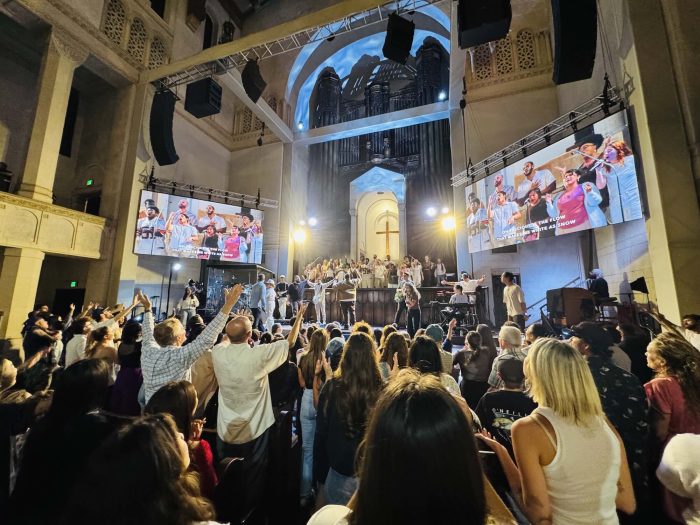
This is not simply a project for our church. It is part of the biblical vision of who we are becoming—one body, one family, one people in Christ. This is what a healthy church changing lives through Christ looks like: a church where every one can experience Welcome Home.
Pause and Reflect
- When have I treated someone’s difference as an inconvenience rather than receiving it as a gift?
- Am I genuinely curious about people whose experiences differ from mine?
- Where might I be expecting someone to become more like me rather than helping us both become more like Jesus?
- Who is God inviting me to move toward—not merely greet, but walk with?
- Who can I ask, “Tell me more,” this week?
Unity & Belonging
Maria Hansen-Quine
Hillsong Church is a multi-generational church made up of people from richly different backgrounds—committed to unity and belonging centered on Christ. We are intentional about building a church where people of all ages, stages, cultures, backgrounds and abilities participate fully in the body of Christ—in line with how Jesus prayed (Jn 17:22-23), with what the early church modeled (Acts 2, Gal 3:28) and with what heaven will be like (Rev 7:9). This commitment is part of our vision to be a healthy church changing lives through Christ. As part of our Welcome Home Value, we are invitational—creating warm environments where every one is valued.
 2026年 09月 1日